

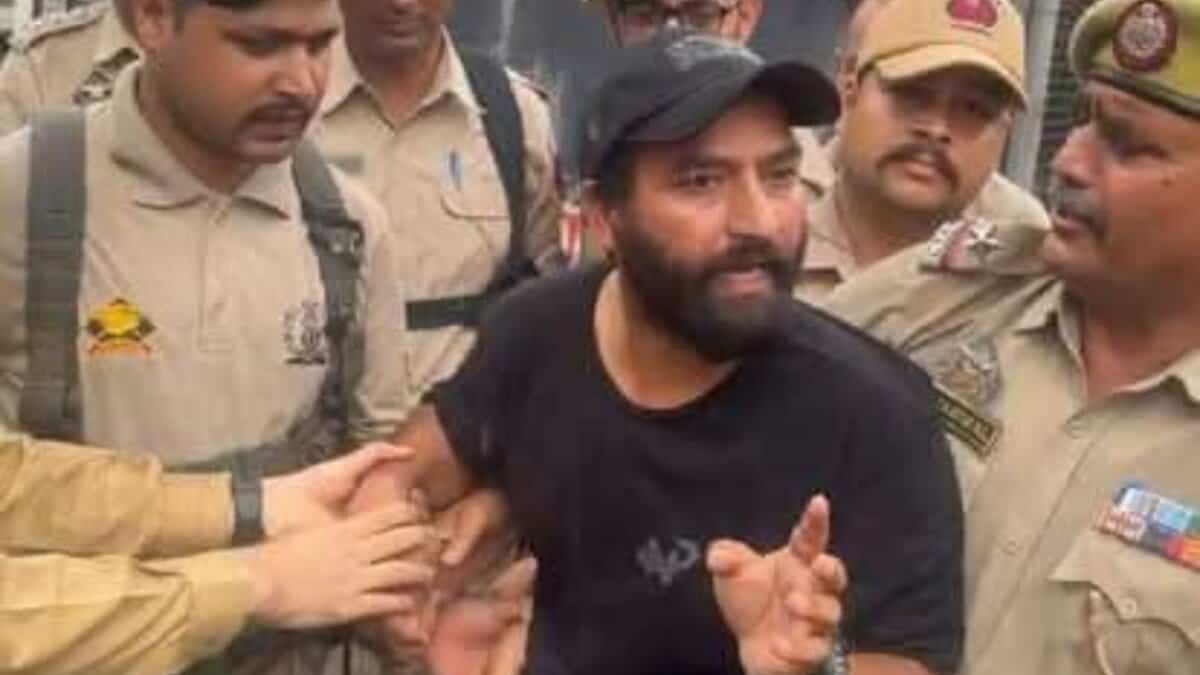
In a pivotal decision for Jammu and Kashmir politics, the J&K High Court has ruled on the controversial detention of Mehraj Malik, the lone AAP MLA in the region’s assembly. Detained under the formidable Public Safety Act (PSA), Malik’s case has drawn significant attention, raising questions about civil liberties and political representation. Following this landmark ruling, the court has ordered his immediate release, sparking discussions among political analysts and activists alike. As Malik’s detention becomes a focal point of debate, it showcases the strained dynamics between government authority and individual rights within Jammu and Kashmir. The implications of this case are far-reaching, elevating Malik’s name in the ongoing discourse surrounding AAP MLA news and the broader fight for justice in the region.
The recent legal developments around Mehraj Malik’s detention reflect larger themes within the political landscape of Jammu and Kashmir. As the only representative of the Aam Aadmi Party (AAP) in the Union Territory, Malik’s situation illustrates the challenges faced by political figures under restrictive laws like the Public Safety Act. His release, mandated by the J&K High Court, signifies a crucial moment for advocates of political freedom and human rights. Furthermore, this ruling not only highlights the intricacies of Jammu Kashmir politics but also emphasizes the importance of vigilance against arbitrary detentions in the name of public order. As discussions continue to unfold, Malik’s experiences shed light on the essential struggle for democracy and accountability in the region.
The High Court Ruling on Mehraj Malik’s Detention
In a significant development in Jammu and Kashmir politics, the J&K High Court has quashed the detention of AAP MLA Mehraj Malik, who had been held under the Public Safety Act (PSA). This ruling not only emphasizes the judicial oversight on administrative powers but also sheds light on the ongoing debates surrounding public safety and personal liberty in the region. Malik’s detention had raised several concerns regarding the use of the PSA, which is often criticized for its stringent measures and potential misuse against political dissenters.
The court mandated the immediate release of Mehraj Malik, thereby reinforcing the principles of justice and individual rights. The ruling has been interpreted as a victory for democratic values in Jammu and Kashmir, where political tensions often run high. Many observers and political analysts are now closely watching how this decision might impact the AAP’s position in Jammu and Kashmir politics, as well as the broader discourse around governance and civil rights.
Implications of Mehraj Malik’s Release for Jammu Kashmir Politics
The release of AAP MLA Mehraj Malik following the quashment of his detention under the Public Safety Act holds significant implications for the political landscape in Jammu and Kashmir. It symbolizes a critical pushback against the stringent measures that have, at times, undermined democracy in the region. His return to public life is anticipated to energize supporters and reshape political narratives, particularly for parties that advocate for civil liberties and human rights.
Moreover, the High Court’s intervention signals a shift in how legal institutions may engage with political figures detained under controversial laws. As political forces in Jammu and Kashmir navigate tumultuous waters, Malik’s case might inspire similar challenges against arbitrary detentions. The developments here could lead to a reevaluation of the Public Safety Act in the context of Jammu Kashmir politics, and it remains to be seen how this will influence future legislative actions by political parties, including AAP.
Public Safety Act and Its Use in Jammu and Kashmir
The Public Safety Act (PSA) has long been a contentious piece of legislation in Jammu and Kashmir, often invoked to detain individuals deemed a threat to public safety. Critics argue that this law is frequently applied in a manner that stigmatizes dissenters and curtails civil rights, as was the case with Mehraj Malik. The quashing of Malik’s detention under the PSA brings renewed attention to the ways this act has been utilized, raising questions about the balance between public safety and fundamental freedoms.
As Mehraj Malik regains his freedom, there is a growing discourse around the necessity of reforming laws like the PSA. Legal analysts suggest lawmakers should focus on fostering an environment that prioritizes democratic engagement rather than fear-based governance. This incident may act as a catalyst for political parties in Jammu and Kashmir, including the AAP, to advocate for legal reforms that protect citizens from unjust state actions and ensure accountability.
Reactions to the Detention and Release of Mehraj Malik
The detention and subsequent release of Mehraj Malik elicited varied reactions across the political spectrum in Jammu and Kashmir. Supporters lauded the High Court’s decision as a triumph for justice and a testament to the resilience of democratic values in the region. Many viewed Malik’s situation as emblematic of ongoing struggles against state overreach, drawing renewed attention to issues of political freedom and civil liberties.
Conversely, detractors of Malik criticized the AAP’s approach, arguing that his initial detention was necessary for maintaining public order amidst increasing political fragmentation. The polarized reactions signify the complex interplay of politics and law in Jammu Kashmir, and highlight the need for dialogues addressing the broader implications of maintaining public safety while upholding democratic norms.
The Role of the Judiciary in Political Detention Cases
The recent ruling of the J&K High Court quashing Mehraj Malik’s detention under the Public Safety Act underscores the pivotal role that the judiciary plays in overseeing political detention cases. The judiciary serves as a critical check on the powers of the executive, ensuring that laws are not wielded as instruments of political suppression. By intervening in Malik’s case, the court has reaffirmed its commitment to safeguarding personal liberties against arbitrary state actions.
Judicial scrutiny of such cases is paramount in maintaining the rule of law, particularly in politically charged environments like Jammu and Kashmir. As instances of detention become more frequent, the judiciary’s position becomes even more critical in holding authorities accountable and protecting citizens’ rights. The outcomes of cases like Mehraj Malik’s could set important precedents for how future detentions under the PSA are handled, influencing both legal interpretations and political practices moving forward.
Mehraj Malik’s Political Future Post-Detention
Following the J&K High Court’s decision to quash his detention, Mehraj Malik’s political future appears to be filled with new possibilities and challenges. As the only AAP MLA in Jammu and Kashmir, Malik’s release revitalizes his potential to mobilize support and advocate for party initiatives. His experience during the detention may also shape his political rhetoric, focusing on issues of civil rights and the need for reform of the Public Safety Act.
However, Malik must navigate a complex political landscape marked by deep-rooted tensions and factional divisions. His ability to connect with constituents and redefine his party’s narrative will be essential in the upcoming political landscape. Malik’s strategies in framing his experiences and advocating for change will likely determine AAP’s relevance and impact in Jammu Kashmir politics.
Civil Liberties Under Threat in Jammu and Kashmir
The case of Mehraj Malik has brought to the forefront crucial discussions about civil liberties under the Public Safety Act in Jammu and Kashmir. The concerns among citizens about government actions that appear to subvert individual rights continue to grow. Many advocates argue that the PSA is misused to target political figures and activists, effectively stifling dissent and curtailing democratic freedoms.
The wider implications of Malik’s release underscore the urgency for civil liberties in Jammu and Kashmir. As public sentiment shifts towards accountability and justice, there is a call for both local and national parties to take a stand against laws that infringe upon personal freedoms. The developments surrounding Malik’s case could catalyze movements aimed at reforming the PSA and advocating for a more respectful approach to governance that champions the protection of rights for all citizens.
The AAP’s Position in Jammu Kashmir Politics
The role of the Aam Aadmi Party (AAP) in Jammu Kashmir politics is increasingly significant, especially in light of Mehraj Malik’s experiences with the Public Safety Act. As the sole representative in the assembly, Malik embodies the challenges and opportunities faced by the party in a politically sensitive region. The outcome of his case could serve as a litmus test for AAP’s strategies and its ability to resonate with local populations.
With a renewed focus on civil liberties and governance reform, AAP may leverage Malik’s release to strengthen its platform and position against traditional political structures in Jammu and Kashmir. This could energize grassroots movements and engagement, appealing to voters who prioritize rights and accountability. The way AAP navigates this pivotal moment will likely define its political narrative and electoral prospects in the territory.
Public Safety Discussions: Navigating Law and Politics
As discussions around the Public Safety Act intensify following the quashing of Mehraj Malik’s detention, the intertwining of law and politics in Jammu and Kashmir takes center stage. The PSA has often been a point of contention, and advocates are calling for a more nuanced approach that respects civil liberties while still addressing genuine public safety concerns. This delicate balance continues to be a focal point for many stakeholders in the region.
The case of Malik amplifies the debates surrounding the implications of stringent laws on political dissent and public opinion. As civil society organizations and political parties engage in dialogue about potential reforms, the challenge remains to create legislation that protects citizens without compromising their fundamental rights. The legal community’s response to events such as Malik’s detention will play a crucial role in shaping the future of governance and civil liberties in Jammu and Kashmir.
Frequently Asked Questions
What led to the detention of AAP MLA Mehraj Malik under the Public Safety Act?
AAP MLA Mehraj Malik was detained under the Public Safety Act (PSA) which allows for preventive detention in Jammu and Kashmir. His detention sparked discussions about Jammu Kashmir politics and the implications of such stringent measures on public safety and individual rights.
What was the outcome of Mehraj Malik’s detention by the J&K High Court?
The J&K High Court quashed the detention of Mehraj Malik, ruling that the authorities must release him immediately. This decision highlights ongoing controversies related to the Public Safety Act in Jammu and Kashmir.
How does Mehraj Malik’s release impact AAP MLA news in Jammu and Kashmir?
The release of Mehraj Malik, the sole AAP MLA in Jammu and Kashmir, is significant in AAP MLA news as it reflects the legal challenges faced by elected representatives under the Public Safety Act, and it may influence the political landscape in the region.
What does the J&K High Court’s decision on Mehraj Malik signify for the Public Safety Act?
The J&K High Court’s decision to release Mehraj Malik signals a potential scrutiny of the Public Safety Act’s application, raising questions about its use in Jammu Kashmir politics and whether it adheres to principles of justice and civil liberties.
What are the implications of Mehraj Malik’s detention for Jammu Kashmir politics?
Mehraj Malik’s detention and subsequent release under the Public Safety Act underscore the ongoing tensions in Jammu Kashmir politics, reflecting how legal measures can be employed against political figures and the broader discourse on governance and human rights in the region.
| Key Point | Details |
|---|---|
| Detention Status | Quashed by J&K High Court. |
| Legislator | Mehraj Malik is the sole AAP MLA in Jammu and Kashmir. |
| Legal Action | Detention was under the Public Safety Act (PSA). |
| Court Order | J&K High Court ordered immediate release. |
Summary
The detention of Mehraj Malik has been quashed by the J&K High Court, emphasizing the legal system’s role in safeguarding individual rights against potentially unjust measures. As the only Aam Aadmi Party (AAP) member in the Union Territory’s assembly, Malik’s detention under the Public Safety Act raised significant concerns about political freedoms and civil liberties in Jammu and Kashmir. The court’s ruling not only orders his immediate release but also serves as a critical reminder of the importance of judicial oversight in administrative actions. This landmark decision highlights the ongoing discourse surrounding governance, law enforcement, and the rights guaranteed to individuals, setting a precedent for future cases involving political figures and their detentions.



























