

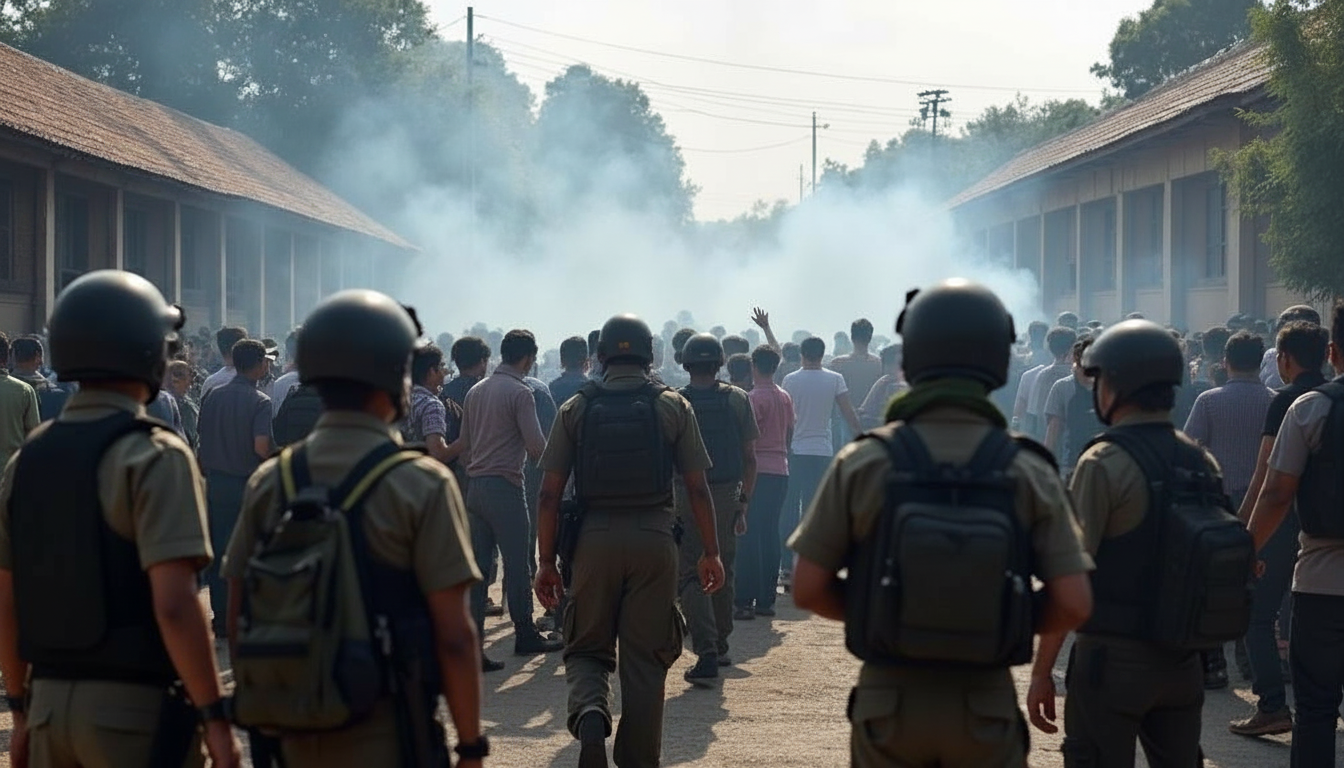
In recent Imphal news, the JNIMS crowd control incident has showcased the challenges faced by security forces during civil disturbances. On June 10, tension escalated at the Jawaharlal Nehru Institute of Medical Sciences as a large gathering formed near the hospital’s mortuary, prompted by the recovery of six bodies. The emotional response from various communities was palpable, marked by grief and frustration at perceived inaction from authorities. Security forces found it necessary to implement crowd dispersal measures, resorting to tear gas to restore peace amid rising tensions. This incident highlights the delicate balance of maintaining public safety while addressing the concerns of aggrieved citizens in sensitive situations.
The recent crowd management event at the Jawaharlal Nehru Institute of Medical Sciences illustrates the complexities involved in maintaining order during public gatherings. Following a distressing tear gas incident, security personnel were compelled to take action as a multitude of individuals congregated at the hospital to mourn and advocate for justice for the deceased. This marked a stark moment of conflict between citizens and authorities, raising significant questions about the effectiveness of community responses to tragedy. As the events unfolded, the combination of emotional unrest and a heightened security presence painted a vivid picture of the ongoing struggle for peace in challenging circumstances. Observers closely monitored this situation, recognizing its implications for future interactions between the public and security forces.
Tension Surrounding JNIMS Hospital: A Community’s Response
The atmosphere around the Jawaharlal Nehru Institute of Medical Sciences (JNIMS) in Imphal became increasingly charged as the news of six recovered bodies reached the community members. Around 4:30 PM, individuals from various backgrounds began congregating at the hospital mortuary complex, displaying a profound sense of sorrow and anger over the tragic circumstances surrounding the deceased. Eyewitnesses reported that emotions were palpable, with many attendees expressing their frustration at the local authorities for their perceived lack of action regarding the incident. The gathering quickly transformed into a show of unity and shared grief, as community members sought answers and accountability.
As the crowd grew larger, the intensity of the gathering escalated, causing concern among local officials. The influx of mourners highlighted the deep-seated issues within the community and the urgency for effective intervention. It became evident that this incident was not just about the loss of life; it was about the community’s demand for justice and the resolution of ongoing tensions. The mere presence of the six bodies served as a stark reminder of the loss felt throughout the area, and the public’s outcry illustrated their feelings of helplessness in the face of violence and loss.
Crowd Control Measures at JNIMS: Response to Rising Tensions
With the situation at the JNIMS mortuary escalating, security forces were compelled to take action to restore order. Reports indicated that as tensions reached a boiling point, officials decided that crowd control measures were necessary to prevent a potential crisis from spiraling out of control. The deployment of tear gas shells was a controversial but ultimately necessary tactic aimed at dispersing the growing crowd, which had been vocalizing their discontent and grief over the tragic circumstances surrounding the recovered bodies. This intervention highlighted the challenges faced by security forces tasked with maintaining peace in such emotionally charged situations.
The use of tear gas served its immediate purpose, effectively clearing segments of the crowd and allowing security forces to regain control of the situation. However, this method raises questions surrounding the balance between public safety and the rights of citizens to voice their grievances. As community members were forced to disperse amidst the gas, the complex relationship between security forces and civilians became evident, revealing underlying tensions that extend beyond this singular incident. Monitoring efforts remain heightened around the JNIMS hospital as authorities strive to prevent further escalations and ensure that the community’s calls for justice are addressed.
Community Grief and Anger: Understanding the Crowd Dynamics
The convergence of community members at the JNIMS mortuary was more than a response to the recovered bodies; it was a culmination of grief and frustration directed towards the systemic issues that have plagued the region. As families and friends of the deceased gathered to mourn, the atmosphere was charged with emotions that were justifiably intense. Witnesses recounted the poignant scenes of mourners expressing anger not just at the loss of their loved ones but also at what they felt was a systemic failure to provide safety and justice. This incident encapsulated the collective emotion of a community facing ongoing challenges.
As the crowd began to swell, the dynamics shifted from simple mourning to a potent mix of outrage and demand for accountability. Each person’s voice contributed to a chorus demanding answers and action from local authorities. This gathering was not just a display of sorrow; it represented a deeper dissatisfaction with the perceived inaction regarding crime and violence in the area. Such moments of community gathering are essential in amplifying the call for justice, highlighting the critical role emotions play in social movements and community responses to tragedy.
Aftermath of the Tear Gas Incident at JNIMS
In the aftermath of the tear gas incident at JNIMS, the atmosphere remained tense yet reflective as authorities assessed the situation. The immediate dispersal of the crowd did not quell the disturbances entirely but merely pushed them beneath the surface. Security personnel increased their presence around the hospital area, seemingly to deter any further gatherings and to reassure the community that measures were in place to prevent violence. Despite the clear intent of the security forces to restore order, there is a palpable sense of frustration among the local populace who may feel unheard and dismissed.
As authorities monitor the developments emerging from this incident, it is crucial for them to engage with community leaders and members to foster dialogue. Addressing the grievances surrounding both the loss and the response to the crowd is vital for healing and rebuilding trust. In an area where grief can easily turn into unrest, open communication and acknowledgment of communal pain are essential for moving forward. The public’s response, characterized by demands for justice, underscores the necessity of a proactive approach in addressing community safety and concerns.
The Role of Local Authorities in Managing Unrest at JNIMS
The role of local authorities during the unrest at JNIMS underscores the complexities of crisis management within communities facing tragedy. As security forces responded to a volatile situation requiring immediate action, their decisions reflect the dual responsibilities to uphold peace and address public sentiment. The reliance on measures such as tear gas showcases the weight of the burden on authorities to maintain order amidst public outcry for justice. The challenge lies in recognizing that while suppression might achieve short-term goals of crowd dispersal, it rarely fosters long-term solutions to communal discontent.
Authorities must adopt strategies that focus on engagement and conflict resolution as opposed to merely reactive measures. Long-lasting solutions require deeper understanding and collaboration with community members to identify the root causes of unrest. By incorporating open forums and transparent communication channels in their strategies, local authorities can work towards alleviating frustrations. The ongoing discourse must pivot towards ensuring safety, accountability, and healing, affirming the community’s needs while restoring faith in governance.
Navigating Emotional Responses: The Community’s Need for Support
Navigating the emotional aftermath of the events surrounding JNIMS calls for an acknowledgment of the grief and anger felt by the community. The psychological impacts of such an incident can be extensive, leaving families struggling to cope with the trauma of loss amidst chaotic circumstances. It is imperative to offer mental health support and community resources to assist individuals who witnessed the event or lost loved ones. Such initiatives can serve as a vital component in the healing process, allowing community members to share their experiences in safe spaces where mutual support is available.
Furthermore, community engagement programs can act as bridges between authorities and residents, paving the way for constructive discussions about policy and public safety. By providing platforms for dialogue, the community’s need for recognition and understanding can be met, fostering a more cohesive and supportive environment. The emotional journeys ahead for those impacted by the JNIMS incident are significant, and they require a collective commitment to address not just the immediate fallout but also the long-term implications of trauma and grief.
Impacts of Civil Discontent on Local Governance
The unrest witnessed at the JNIMS mortuary following the incident involving the recovery of six bodies illustrates the far-reaching impacts of civil discontent on local governance. Communities in distress often seek outlets for their frustrations, leading to heightened pressure on officials to act decisively. The visibility of protests and gatherings serves to elevate public awareness of systemic issues, ultimately influencing policy direction and local governance strategies. In response to such incidents, officials must reflect on community values and ensure that their governance is aligned with the needs and priorities of the citizens they serve.
Moreover, civil discontent can push local leaders to reevaluate their engagement strategies with constituents. In these moments, responsiveness becomes crucial, requiring transparency in operations and proactive communication. By acknowledging grievances and working collaboratively with aggrieved populations, local governance can pave pathways to resolution and foster a stronger sense of community ownership over matters of public safety and justice.
Future Implications: Learning from the JNIMS Incident
The events surrounding the JNIMS incident provide a strategic learning opportunity for both community members and local authorities. Understanding the emotional, social, and political factors at play can enable stakeholders to develop more effective crowd management and community engagement strategies. By analyzing what transpired, authorities can recalibrate their approaches to policing and ensuring public safety, attempting to mitigate the fragility of community relations during times of unrest. Learning from past actions is essential for building a more resilient and informed approach to future public incidents.
Equally, communities can harness their collective power through advocacy and organized efforts aimed at policy changes. By channeling grief and frustration into productive dialogue, communities can influence local governance in a way that prioritizes safety and justice. Awareness of the underlying tensions should propel not just a reaction to symptoms but a comprehensive strategy to address systemic issues contributing to unrest. The JNIMS incident stands as a reminder that both authority and community must engage in an ongoing dialogue to foster a healthier relationship and create a safer environment for all.
Frequently Asked Questions
What incident led to the deployment of tear gas by security forces at JNIMS in Imphal?
On June 10, a large crowd gathered near the JNIMS hospital mortuary in Imphal following the recovery of six bodies believed to have been held hostage. Emotions ran high, leading to tensions among the attendees. To disperse the crowd and prevent violence, security forces fired tear gas shells, temporarily clearing the area and restoring order.
| Key Point | Details |
|---|---|
| Location | Jawaharlal Nehru Institute of Medical Sciences (JNIMS), Imphal |
| Date and Time | June 10, late evening |
| Incident | Security forces fired tear gas to disperse a large crowd |
| Reason for Gathering | People awaited the recovery of six bodies held hostage earlier |
| Emotions Displayed | Grief, anger, and dissatisfaction towards authorities |
| Outcome | Crowd was dispersed temporarily; situation brought under control |
| Current Situation | Heightened security and monitoring around the hospital |
Summary
JNIMS crowd control measures were put to the test on the evening of June 10, 2023, when a large crowd gathered at the Jawaharlal Nehru Institute of Medical Sciences in Imphal. The assembly, primarily driven by grief and anger over the recovery of six bodies, highlighted the emotional turmoil of the community. Authorities faced significant pressure as emotions escalated, prompting security forces to intervene with tear gas to restore calm. This incident underscores the complexities of managing crowd dynamics in sensitive situations, particularly in the context of public grief and unrest. Improved communication and preparedness in crowd control strategies at facilities like JNIMS are essential to maintain order and prevent future escalations.



























