

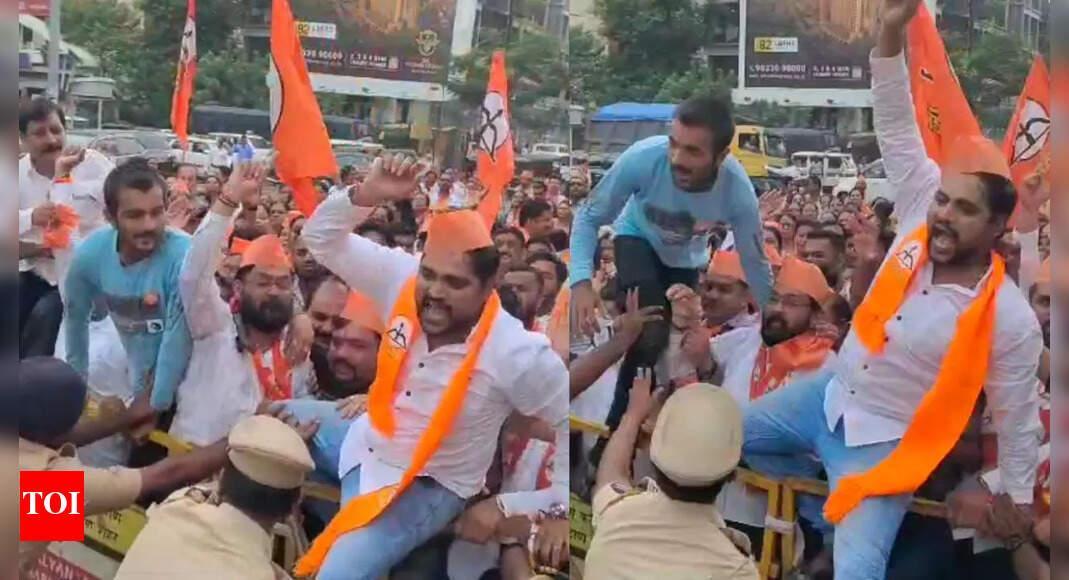
The Shiv Sena UBT rebellion marks a significant turning point in Maharashtra politics as reports of impending political defections continue to emerge. Recently, Uday Samant, a minister in the Shinde faction, forewarned the public of potential “political explosions” following the unexpected shift of six Lok Sabha MPs to the Eknath Shinde-led party. This tumultuous phase raises questions about the stability of the Shiv Sena (UBT) and hints at a strategic focus on the upcoming Brihanmumbai Municipal Corporation (BMC) elections. As political tensions mount, many speculate about the future of Shiv Sena UBT and its leaders amid a rapidly shifting landscape. The implications of these defections could reshape alliances and voter expectations in Maharashtra’s political arena, making it a crucial moment for followers and adversaries alike.
The unrest within the Shiv Sena UBT faction has ignited discussions surrounding the current state of political alignments in Maharashtra. As Uday Samant alludes to more surprising shifts, the specter of factional tensions looms large, with implications that extend far beyond local governance. The anticipated focus on the BMC elections underscores the importance of strategic maneuverings in regional politics, especially in light of recent defections. Observers are keenly watching how these dynamics play out in the coming weeks, as the Shinde-led Shiv Sena aims to solidify its position in the competitive landscape. This unfolding drama not only highlights individual political ambitions but also reflects broader themes of loyalty and power within Maharashtra’s vibrant political tapestry.
Implications of the Shiv Sena UBT Rebellion
The recent political turbulence revolving around the Shiv Sena UBT rebellion has raised critical concerns in Maharashtra politics, particularly as factions within the party continue to splinter. With Uday Samant, a prominent leader in the Shinde camp, suggesting that this is just the beginning of what he describes as ‘political blasts,’ observers of Maharashtra’s political landscape are left wondering how this will affect the party’s integrity and its position in upcoming BMC elections. Given the historical significance of Shiv Sena in Mumbai, the impending changes could reshape the political dynamics of the city’s governance.
Moreover, the ramifications of such internal dissent are expected to linger well beyond immediate political maneuvers. Observers note that political defections, like those witnessed recently, often usher in a period of instability, whereby loyalty becomes contingent and party unity diminishes. As the Shinde faction consolidates its power within the state assembly and looks ahead to the BMC elections, Uday Samant’s revelations about potential further defections underscore the fragility of political alliances in Maharashtra. This adds to the weight of scrutiny on the UBT faction as they work to maintain their political standing amid the pressures of competing forces.
The Role of Eknath Shinde in Shiv Sena Politics
Eknath Shinde’s ascent within the Shiv Sena marks a pivotal moment in the party’s history. His leadership, especially in light of the recent rebellion involving Uday Samant and others, demonstrates a shift towards a more aggressive consolidation of power. Shinde’s ability to attract disgruntled members from UBT portrays a strategic maneuvering that is not only pivotal for his faction’s control but is also influential in shaping the narrative of Maharashtra politics. The dynamics established during this turbulent period will likely set the tone for the upcoming political battles, particularly as the BMC elections draw near.
Furthermore, Shinde’s leadership is characterized by his focus on uniting varying factions within the Shiv Sena and leveraging these alliances to strengthen his position as a key political player in the state. As more members consider their loyalty to either Shinde or UBT, particularly with the underlying potential for additional political defections, the implications for governance and policy direction in Maharashtra become increasingly complex. This tension highlights the crucial interplay between individual ambitions and collective party objectives, underscoring a challenging landscape that Shinde must navigate as he seeks to solidify his legacy.
Future of Brihanmumbai Municipal Corporation (BMC) Elections
The upcoming BMC elections represent a critical juncture for the Shiv Sena, where both factions are vying for dominance in one of India’s most important municipal bodies. Uday Samant’s recent assertions regarding targeting potential political maneuvers towards the BMC underscore the significance of this electoral battleground for the Shiv Sena’s future. Given that the BMC has historically been a stronghold for Shiv Sena, the ramifications of internal conflicts could dramatically alter voter sentiment and influence, making this election one to watch closely for any signs of changing allegiances.
Furthermore, the BMC elections could serve as a litmus test for the effectiveness of Eknath Shinde’s leadership amidst the ongoing turmoil. If his faction can convincingly consolidate power and present a united front, it could effectively overshadow the dissenting UBT faction. Conversely, should the UBT manage to rally support and maintain its electorate, it could signify resilience against the backdrop of political defections. Therefore, the stakes are incredibly high, not just for the parties involved, but also for the governance and policy initiatives that directly impact the citizens of Mumbai.
Political Defections: A Trend in Maharashtra Politics
Political defections have become an increasingly common phenomenon in the landscape of Maharashtra politics, particularly highlighted by the recent Shiv Sena UBT rebellion. This trend not only emphasizes the volatility and changing loyalties among party members but also signals a broader context of dissatisfaction with existing party leaderships and policies. Uday Samant’s comments raise alarm bells about further defections, which could significantly shift the balance of power and influence how future policies are shaped.
The implications of these defections stretch across voter perceptions and electoral outcomes, affecting not just party stability but also governance. As factions like those led by Eknath Shinde continue to disrupt traditional power structures, there is a growing need for parties in Maharashtra to pursue strategies that retain loyal constituents while integrating new support bases. Observers and political analysts will be keenly monitoring how these dynamics play out in upcoming elections, particularly in the context of local governance and the broader political climate.
Uday Samant: A Key Player in Maharashtra’s Political Scene
Uday Samant’s role in Maharashtra’s political realm has garnered much attention, especially following his recent statements regarding the potential for more political explosions within the Shiv Sena. As a trusted ally of Eknath Shinde, Samant embodies the aspirations of a faction looking to reassert itself amidst swirling controversies. His implications of ongoing defections highlight not only his strategic position within the party but also his ambition to reshape the political conversation in a climate defined by uncertainty and upheaval.
Moreover, Samant’s vocal support for Shinde’s leadership reflects a larger strategy aimed at consolidating power. By positioning himself in favor of Shinde’s directives, he holds the potential to influence the critical BMC elections and rally support for inevitable upcoming challenges. His proactive approach to addressing potential defections suggests a forward-thinking mindset, pivotal in ensuring the Shinde faction’s unity, effectiveness, and electoral viability as they navigate the tumultuous waters of Maharashtra’s political landscape.
Consequences of Rebellion: The Future of Shiv Sena
The ramifications of the Shiv Sena UBT rebellion will likely be felt for years to come, fundamentally altering the party’s landscape and its approach to internal governance. As Uday Samant hints at possible further defections, the party must now reckon with the consequences of discontent that could lead to more members aligning themselves with rival factions. This ongoing evolution reshapes not only party politics but also voter expectations and the overall stability of governance in Maharashtra.
Additionally, the Shinde faction’s successes and setbacks will set a benchmark for how political rebels can influence mainstream parties in Maharashtra. The shifting relationships and trust dynamics that emerge from this rebellion will have lasting effects on party principles and collaboration. Observers will be closely watching how the Shiv Sena adapts and responds to these challenges in order to maintain its relevance in an increasingly competitive political environment, particularly as critical elections loom.
BMC Elections: A Strategic Focus for the Shinde Faction
With the BMC elections approaching, the Shinde faction of the Shiv Sena is strategically positioning itself as the frontrunner, especially following Uday Samant’s recent proclamations in light of the UBT rebellion. These elections serve not only as a municipal contest but as a reflection of the loyalty and support the factions command among the electorate. The emphasis on the BMC by Samant signals an urgent need to reclaim lost territory and reassure constituents of the party’s governance capabilities and commitment to local issues.
In this context, Eknath Shinde’s leadership and decision-making will be critical in determining the success of the campaign. His ability to manage dissent and present a cohesive strategy will dictate how the party grasps potential voter sentiments. The Shinde faction must seamlessly integrate their promises of governance with the aspirations of the urban electorate, particularly in a city like Mumbai, where BMC plays a vital role in daily life. How effectively this faction communicates its agenda in contrast to the UBT rebellion can significantly influence the electoral outcomes in the BMC.
The Landscape of Maharashtra Politics Post-Rebellion
The current landscape of Maharashtra politics is undergoing significant transformation, particularly in the wake of the Shiv Sena UBT rebellion. The defection of prominent members, including those who previously held substantial influence, has led to a reconfiguration of alliances that were once deemed immovable. This environment of uncertainty creates opportunities for various factions, notably the Shinde faction, to fortify their positions and pursue aggressive electoral strategies, particularly for the BMC elections.
As political defections continue to shape the dynamics at play, each party must adapt to the changing expectations of their constituents. Existing alliances may become strained, with new coalitions emerging as parties re-evaluate their strategies to maintain relevance and power in a shifting political climate. The fallout from the UBT rebellion will certainly reverberate through Maharashtra’s political corridors, compelling leaders to navigate the nuances of loyalty while appealing to a diverse voter base.
Navigating Political Alliances in Maharashtra
Navigating the intricate web of political alliances in Maharashtra has become a challenging endeavor, especially post-rebellion within the Shiv Sena. Uday Samant’s assertions about expecting more defections signal an urgent need for strategic maneuvering among party leaders, particularly those aligned with Eknath Shinde. As different factions jockey for influence, the art of coalition-building becomes paramount in maintaining stability and ensuring electoral success, particularly with the BMC elections looming on the horizon.
Moreover, the necessity of forming strategic alliances extends beyond mere electoral considerations; it also shapes future governance models in Maharashtra. The ability of leaders like Shinde to forge productive collaborations amidst a backdrop of dissent will determine how effectively policies are executed and how public trust is garnered. Thus, as the political landscape evolves, the capacity to navigate these alliances will remain a critical factor in defining the future trajectory of Maharashtra politics.
Frequently Asked Questions
What are the implications of Uday Samant’s remarks regarding the Shiv Sena UBT rebellion?
Uday Samant’s comments about potential ‘political explosions’ signal a tumultuous period in Maharashtra politics, especially concerning the Shiv Sena UBT rebellion. His prediction of fresh defections following the departure of six Lok Sabha MPs to the Eknath Shinde-led faction indicates a possible shift in allegiances that could significantly impact future BMC elections. This situation underscores ongoing instability and the complexities of political defections within the Shiv Sena UBT.
| Key Points | Details |
|---|---|
| Warning of Defections | Uday Samant indicates more political defections from Shiv Sena (UBT) following recent events. |
| Political “Explosions” | Samant refers to the expected defections as political “explosions,” emphasizing the instability within the party. |
| Focus on BMC and MLAs | The next focus for Eknath Shinde’s faction will be the Brihanmumbai Municipal Corporation and the MLAs from Shiv Sena (UBT). |
| Leadership Acknowledgment | Uday Samant recognizes Eknath Shinde’s leadership as the key reason for recent changes within the party. |
Summary
The Shiv Sena UBT rebellion marks a significant chapter in Maharashtra’s political landscape, as Uday Samant hints at ongoing instability and potential defections from the party. This series of political events, described as ‘explosions,’ underlines the challenges faced by the Shiv Sena (UBT) amidst its internal strife. With a focus now shifting towards the Brihanmumbai Municipal Corporation (BMC) and local MLAs, the Shinde faction appears poised to consolidate power and influence. As defections occur, it remains to be seen how these developments will shape the future of Shiv Sena (UBT) and its foothold in Maharashtra governance.



























