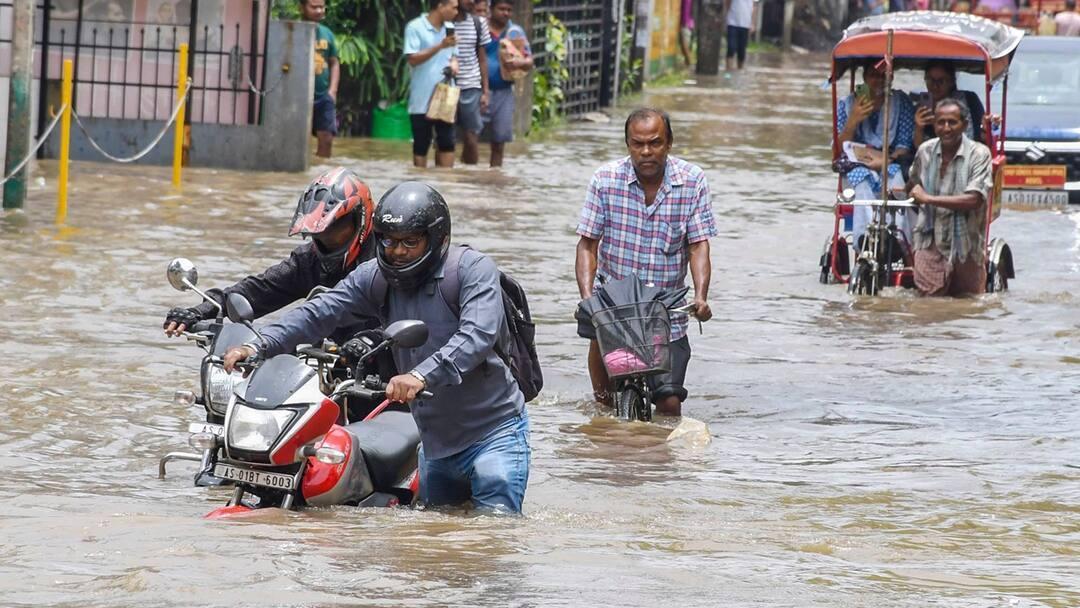
Assam flood relief efforts are currently at the forefront as the state grapples with the aftermath of devastating monsoon rains. With reports indicating that nearly 16,000 individuals were adversely affected across various villages in Dhemaji, the need for urgent flood aid has never been more pressing. Union Home Minister Amit Shah has pledged full support from the central government, reaching out to state officials to coordinate necessary rescue operations in Assam and Arunachal Pradesh. The relentless storms have exacerbated the situation, prompting officials to monitor ongoing Dhemaji flood news closely. As rain continues to impact the region, local communities are in dire need of assistance to recover from this natural disaster and rebuild their lives.
In light of the catastrophic flooding affecting the northeastern states, efforts to provide humanitarian assistance are increasingly vital. The ongoing monsoon season has triggered severe weather conditions, impacting thousands of people in areas like Dhemaji and leading to emergency interventions. Authorities are mobilizing resources to aid flood victims, focusing on the urgent need for evacuation and rehabilitation services across Assam and adjacent Arunachal Pradesh. With the situation evolving rapidly, officials are actively collaborating to ensure that timely support reaches those in distress. As rescue missions progress, the impact of the relentless rains underscores the importance of a coordinated response to these environmental challenges.
Amit Shah’s Assurance for Assam Flood Relief
Union Home Minister Amit Shah’s assurance of aid for flood relief operations in Assam holds significant importance for the disaster-stricken areas. With approximately 16,000 people affected across 69 villages in Dhemaji, the government’s swift response is vital to address the needs of the victims. Shah’s communication with Chief Minister Himanta Biswa Sarma underscores a united front between the state and the central government, emphasizing readiness to mobilize resources to support those in distress during this natural calamity.
The collaborative efforts between Assam’s local government and the Centre can expedite flood relief activities, providing much-needed resources like food, shelter, and medical assistance. As the monsoon impact in Assam continues to be felt, timely interventions and effective management of relief operations are crucial to mitigate the suffering of those caught in the deluge. The proactive approach taken by the government indicates a commitment to restoring normalcy in the affected regions.
Flood Aid Initiatives in Arunachal Pradesh
In addition to Assam, Arunachal Pradesh is facing severe floods due to relentless rainfall, affecting infrastructure and displacing numerous residents. The local administration is working exhaustively to implement flood aid initiatives aimed at supporting the affected populations. Following Amit Shah’s communication, there is an expectation for enhanced coordination between state and central agencies to deliver vital supplies and establish relief camps for those impacted by the floods.
The government’s focus on flood aid in Arunachal Pradesh highlights the need for comprehensive measures to combat the ongoing crisis. Rescue operations have been complicated by erratic weather conditions, but authorities are prioritizing the safety of residents. Initiatives to restore connectivity and essential services are critical to assist those who have lost their homes and livelihoods. By mobilizing aid and resources promptly, both Assam and Arunachal Pradesh can receive the necessary support to overcome this humanitarian challenge.
Rescue Operations in Assam: Challenges and Progress
As the monsoon continues to exert influence over Assam, authorities have been striving to conduct effective rescue operations amidst challenging conditions. The Indian Air Force’s involvement in these operations, although temporarily hindered by poor visibility, signifies the serious approach taken to assist those stranded by the floods. The goal is to evacuate not only the vulnerable populations but also to transport essential supplies to those in need.
Despite the interruptions, efforts are ramping up with improvements in weather conditions allowing for the resumption of air operations. Local officials are coordinating their activities with the Air Force to ensure the safety of the rescue teams while delivering relief to the affected areas. The collaboration between various agencies highlights the urgency required in disaster response as the impact of the monsoon on Assam continues to escalate.
Dhemaji Flood News: Latest Developments
Dhemaji, a region heavily affected by floods, continues to be in the spotlight as news updates highlight the ongoing struggle of its residents. With significant numbers affected and infrastructure heavily damaged, the urgency of the situation is underscored by daily reports showing the extent of destruction. Local administration is tirelessly working to assess the damage and to ensure that necessary flood relief measures are implemented to aid the affected populations.
As new developments emerge, the community is rallying together to support each other amidst the devastating aftermath of the floods. Relief efforts are being organized, and there is a growing concern about potential long-term impacts on health and infrastructure if immediate attention is not provided. Stakeholders, including government officials and local NGOs, are continuously monitoring the situation to address critical needs and provide timely assistance.
Monsoon Impact on Assam: A Continuing Challenge
The monsoon season in Assam has proven to be particularly challenging this year, with the ongoing rainfall aggravating the flood situation. As water levels rise, towns and villages face significant challenges, leading to widespread displacement and heightened risks of waterborne diseases. The Assam State Disaster Management Authority has been proactive in issuing alerts and preparing for potential further flooding, underlining the continuing threat posed by the monsoon.
In response to these challenges, local governments and relief organizations are mobilizing resources to provide emergency support to affected citizens. Public advisories are being circulated to ensure the safety of residents and minimize travel during this critical period. The need for resilient infrastructure and a robust disaster response plan has never been clearer, as Assam grapples with the compounding effects of climate change and unpredictable weather patterns.
Rescue Operations in Arunachal Pradesh Amidst Heavy Rains
As heavy rains continue to batter Arunachal Pradesh, local authorities have initiated vigorous rescue operations to assist those impacted by flooding. The situation has led to significant infrastructure damage, necessitating immediate responses to recover stranded individuals and provide them with essential resources. Rescue teams are working hand-in-hand with volunteers to ensure that aid reaches all corners of the affected areas, showcasing a spirit of resilience in the face of disaster.
Coordination among various rescue teams has been prioritized, ensuring that those most in need are reached without delay. However, challenging weather conditions persist, affecting visibility and complicating operations. The embrace of technology and support from state and central agencies enhances the efficiency of these operations, and as more resources and personnel are deployed, the focus remains on saving lives and restoring hope in the communities devastated by the floods.
Community Support and Rehabilitation Efforts
In the wake of the floods across Assam and Arunachal Pradesh, community support systems have emerged as crucial lifelines for those affected. Local volunteers, NGOs, and social organizations are stepping up to provide essential aid, including food, medical supplies, and shelter to displaced families. These collective efforts underscore the strength of solidarity in times of crisis, fostering hope and resilience among the affected populations.
Moreover, rehabilitation efforts are being meticulously planned to ensure a sustainable recovery for the communities impacted by the floods. Long-term strategies aim to restore infrastructure, revive local economies, and ensure that residents can rebuild their lives. Engaging community leaders in these initiatives further enhances the effectiveness and relevance of rehabilitation programs, signifying a move towards an inclusive recovery methodology.
The Role of Technology in Flood Management
Technology plays a pivotal role in modern flood management, especially in states like Assam and Arunachal Pradesh that are prone to seasonal inundations. Employing satellite imagery and real-time data analytics allows authorities to anticipate flood patterns and respond proactively. This technological incorporation aids in resource allocation for flood relief operations, ensuring that help is delivered precisely where it is most needed amid chaos.
Furthermore, digital platforms have been employed to facilitate communication and information sharing among rescue teams and local populations. State and central agencies are leveraging technology for enhanced coordination, which has proven instrumental in managing rescue operations effectively. As we witness the increasing reliance on technology, it is clear that implementing smart solutions into flood management strategies can significantly improve outcomes for disaster-affected communities.
Long-term Solutions for Flood Resilience in Northeast India
Addressing the recurring flood problems in Northeast India requires comprehensive long-term solutions that go beyond immediate relief efforts. Investment in robust infrastructure, such as improved drainage systems and flood barriers, is essential to mitigate the impacts of future floods. Stakeholders are advocating for policies that support sustainable land management practices and better urban planning to minimize flooding risks.
Engaging local communities in the development of flood resilience strategies is also crucial. By involving residents in planning and decision-making, solutions can be tailored to the specific needs of each region. Additionally, educational programs focusing on disaster preparedness can empower communities to be proactive and better equipped for future flooding events, ultimately contributing to a safer and more resilient Northeast India.
Frequently Asked Questions
What measures are being taken for Assam flood relief after Amit Shah’s assurance?
Following Amit Shah’s assurance of central aid, Assam’s Chief Minister Himanta Biswa Sarma has outlined ongoing relief operations for the nearly 16,000 individuals affected by floods in Dhemaji. The government is focused on providing immediate rescue and rehabilitation assistance, supported by the central government to manage the worsening flood situation.
How is the Assam government responding to flood aid requests from affected communities?
The Assam government is responding to flood aid requests by coordinating with the Central government, as highlighted by Amit Shah’s commitment to provide all possible assistance. Local administrations are actively involved in rescue and relief operations, ensuring that affected areas receive necessary resources and support.
What are the latest updates regarding the Dhemaji flood news?
The latest Dhemaji flood news indicates that heavy rains have impacted 69 villages, affecting around 16,000 people. Authorities are working diligently on rescue operations and relief efforts. Amit Shah has assured central support to assist the ongoing situation in Assam.
What impact is the monsoon having on Assam and Arunachal Pradesh flood relief efforts?
The monsoon’s intensive rains have severely affected Assam and Arunachal Pradesh, complicating flood relief efforts. Rescue operations, particularly in regions like Dhemaji, have been initiated. Amit Shah has assured ongoing support and resources from the Central government to those impacted by the monsoon-induced floods.
What steps can individuals take during the ongoing rescue operations in Assam?
Individuals should adhere to official advisories and avoid traveling through flood-affected or landslide-prone areas to ensure their safety during the ongoing rescue operations in Assam. It is essential to stay informed through local news and updates related to the Assam flood relief efforts.
| Key Points |
|---|
| Amit Shah assures flood relief aid for Assam and Arunachal Pradesh. |
| Nearly 16,000 people affected in 69 villages of Dhemaji, Assam. |
| Heavy rainfall causes severe floods and landslides, disrupting infrastructure in Arunachal Pradesh. |
| Indian Air Force involved in rescue operations, which were temporarily halted due to poor visibility. |
| Further heavy rainfall and thunderstorms predicted over East Siang and surrounding districts. |
| Authorities advise avoiding travel in flood-affected areas until conditions improve. |
Summary
Assam flood relief is a critical concern as severe weather continues to impact thousands. Massachusetts has assured support to both Assam and Arunachal Pradesh in their efforts to manage the flood situation effectively. With nearly 16,000 individuals affected in Dhemaji and continuous rain threatening more areas, rescue and evacuation operations are ongoing. The government is taking necessary steps to provide aid, although the public is urged to remain cautious and heed safety advisories during this challenging time.